Watercolor Birth Flowers: An Embroidery Review
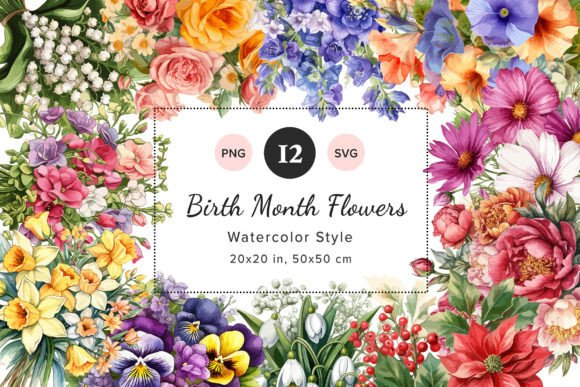
As a professional embroidery designer and product reviewer, I approach every new digital asset with a healthy dose of skepticism. The market is flooded with beautiful screen images that translate poorly to needle and thread. When evaluating the Watercolor Birth Flowers, SVG PNG collection for potential use in my studio, my primary concern was not just aesthetic appeal, but stitchability. These illustrations possess a soft, organic charm that is currently dominating the personalized gift market, but translating watercolor gradients into a machine embroidery design requires careful consideration of density, texture, and fabric compatibility.
First Impressions and Artistic Translation
Upon opening the files, the visual personality of these birth flower illustrations is immediately apparent. They avoid the stiff, cartoonish look of traditional digitized florals, opting instead for a delicate, painted aesthetic. For an Etsy seller or boutique owner, this mood is crucial. It signals "handmade" and "heirloom quality" rather than mass production. However, as a crafter preparing to hoop up a project, I had to assess how these soft edges would behave under tension. The artwork relies on subtle color blending, which in embroidery terms usually means complex fill stitches or layered thread colors. My initial assessment was that these designs are best suited for projects where the fabric itself contributes to the background, allowing the embroidery to act as an accent rather than a heavy patch.
Real-World Application: The Custom Sweatshirt Test
To truly evaluate this digital embroidery file, I applied it to a real-life scenario: creating a custom embroidered sweatshirt for a client’s birthday gift. Sweatshirts are a staple for small shop products, but their fleece backing and stretchy knit structure can be unforgiving. I selected the Peony birth flower design to test how the watercolor effect held up against fabric texture.
The stitching process revealed both strengths and necessary precautions. Because the design mimics watercolor, it utilizes varying stitch densities to create depth. On the sweatshirt, this created a lovely, tactile dimension. However, I noted that the lighter "wash" areas of the illustration required precise stabilizer choice to prevent puckering. A cut-away stabilizer was non-negotiable here to support the intricate running stitch details without distorting the knit. The finished product looked stunning, with the thread catching the light to mimic the sheen of wet paint. This confirmed that the Watercolor Birth Flowers, SVG PNG assets are viable for custom apparel, provided you respect the relationship between stitch density and garment weight.
Navigating Fabric Limitations and Hoop Sizes
While the sweatshirt test was successful, not every canvas is forgiving. As you integrate these illustrations into your inventory, you must be strategic about placement. The organic, flowing lines of birth flowers can get lost or distorted on highly textured fabrics like terry cloth towels or chunky knits unless you use a topping. Conversely, on very thin fabrics like voile or lightweight linen, the satin stitch outlines may pull too hard, causing tearing.
Hoop size is another critical variable. These designs often feature sprawling stems and petals that require adequate space to breathe. Attempting to shrink this machine embroidery design down to fit a 4x4 hoop for a baby onesie might result in dense, bulletproof stitching that ruins the drape of the garment. Always check the original dimensions before resizing. If you need a smaller version for baby embroidery or cap decoration, verify that the digitizer has provided specific small-hoop variations. Resizing complex watercolor-style fills by more than 10-15% can break the stitch integrity and ruin the artistic effect.
Commercial Viability for Makers and Sellers
For creative entrepreneurs, the value of an embroidery file lies in its versatility and customer recognition. Birth flowers have high search volume and emotional resonance, making them excellent for personalized gifts and holiday embroidery. From a business perspective, this collection offers strong ROI because the same floral assets can be applied across multiple categories. I can see these working beautifully on tote bag designs for bridesmaids, nursery decor pillows, and even as embroidered patches for denim jackets.
However, brand consistency is key. If your shop specializes in bold, collegiate-style lettering, these delicate watercolor illustrations might clash with your existing aesthetic. They shine brightest when paired with minimalist serif fonts or fine-line script. For digital product sellers offering printable mockups, ensure your preview images accurately represent the stitched texture. Customers need to understand they are buying a textile interpretation of watercolor, not a direct print. Managing this expectation builds trust and reduces returns.
Essential Designer Notes for Success
Before listing a finished product or selling items made with these assets, adhere to these practical guidelines derived from hands-on testing:
- Test Stitch on Scrap Fabric: Never run a new design directly on a final product. Test on a scrap of the exact material you intend to use to gauge stabilizer needs and thread tension.
- Evaluate Thread Color Contrast: Watercolor effects rely on tonal variation. Ensure your thread colors have enough contrast to define the petals and leaves; otherwise, the design will look muddy once stitched.
- Check Licensing Terms: Verify whether your purchase includes commercial rights for physical products versus digital redistribution. This distinction is vital for Etsy sellers and craft business owners.
- Inspect Small Details: Zoom in on the digital file to check for tiny jump stitches or disconnected elements that might cause production headaches during bulk runs.
- Mockup in Black and White: Viewing the design in grayscale helps identify if the value structure holds up without relying solely on color differentiation.
- Stabilizer Strategy: Use tear-away for stable wovens and cut-away for stretchy knits. Consider a water-soluble topping for textured fabrics to keep the running stitch details crisp.
- Wash Testing: If selling tea towels or baby items, wash your test sample. Watercolor-style fills can sometimes shift or gap after laundering if the underlay isn't sufficient.
Final Verdict on Design Assets
The Watercolor Birth Flowers, SVG PNG collection represents a sophisticated intersection of digital art and textile craft. It moves beyond basic clipart into the realm of true design assets that can elevate a handmade product from simple to premium. For the experienced embroiderer willing to manage stitch density and fabric pairings thoughtfully, these illustrations offer a pathway to creating deeply meaningful, commercially viable goods. Just remember that in embroidery, the screen image is merely a suggestion; the needle tells the truth. Treat these files with the technical respect they demand, and they will reward you with beautiful, sellable results that resonate with customers seeking that perfect blend of nature and personalization.